Knowledge Hub
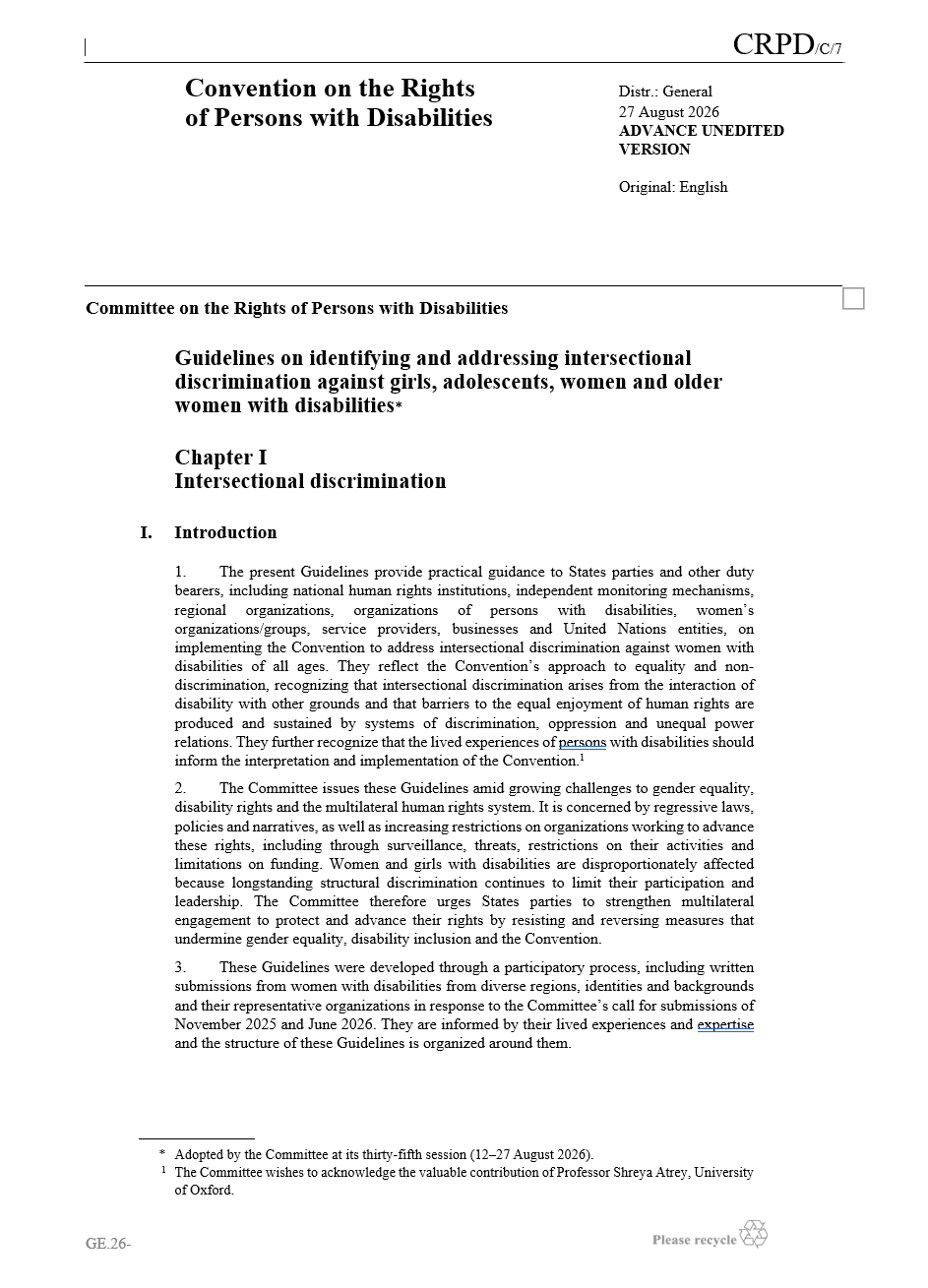
Guidelines on identifying and addressing intersectional discrimination against girls, adolescents, women and older women with disabilities
These guidelines from the United Nations Committee on the Rights of Persons with Disabilities give States parties and other duty bearers practical guidance on identifying and addressing intersectional discrimination against women and girls with disabilities of all ages. Developed through a participatory process that drew on submissions from women with disabilities and their representative organisations around the world, they set out how disability interacts with gender, age, race, Indigeneity, sexual orientation, gender identity, migration status and other grounds to create distinct barriers to the enjoyment of human rights.
The guidelines are organised in three parts. The first sets out the legal basis for addressing intersectional discrimination under the Convention and wider international human rights law. The second draws on lived experience to show how intersectional discrimination plays out across violence, legal capacity and access to justice, bodily autonomy and sexual and reproductive health and rights, institutionalisation, education, economic rights, participation, humanitarian action and climate change. The third outlines legislative, policy and sectoral measures, including in international cooperation, alongside a framework for accountability and implementation. This is an advance unedited version, adopted at the Committee's thirty-fifth session in August 2026.
- Publication year2026
- Source or author/sUnited Nations Committee on the Rights of Persons with Disabilities
- Resource type
- Countries or regions
- Sectors or themes