Knowledge Hub
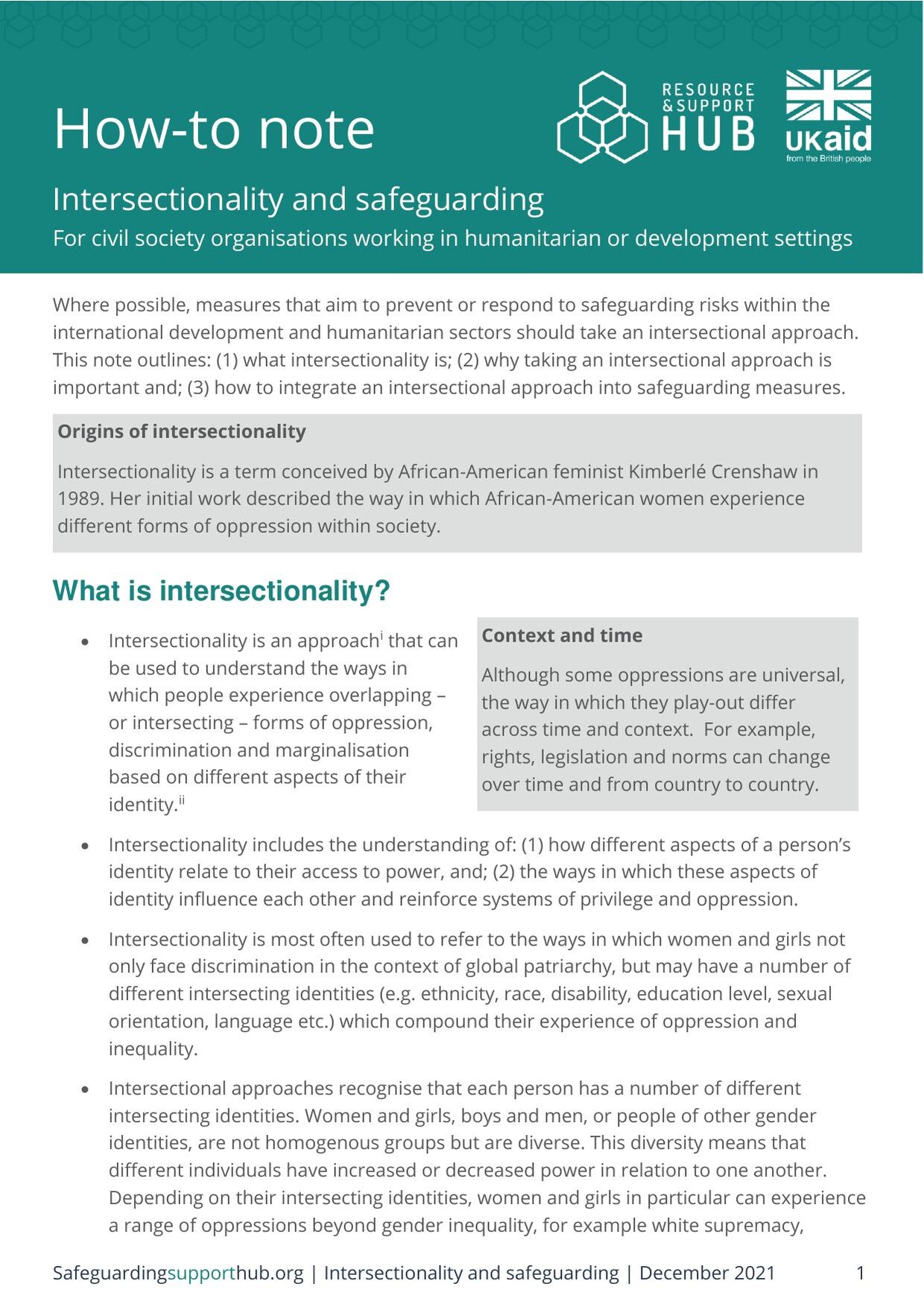
Intersectionality and safeguarding for civil society organisations working in humanitarian or development settings
This how-to note explains what intersectionality is and why it matters to organisations working in humanitarian and development settings. It traces the term to Kimberle Crenshaw's 1989 work describing how African-American women experience overlapping forms of oppression, and sets out how intersectional approaches recognise that people hold multiple identities that interact with one another and with systems of power and privilege.
The note covers three things: what intersectionality is, what taking an intersectional approach means and why it is important, and how to integrate that approach into safeguarding measures. It argues that measures to prevent or respond to safeguarding risks should take an intersectional approach wherever possible, because the same person's overlapping identities shape both their exposure to harm and their ability to report it.
- Publication year2021
- Source or author/sSafeguarding Resource and Support Hub
- Resource type
- Countries or regions
- Sectors or themes