Knowledge Hub
What works to close digital gender gaps?
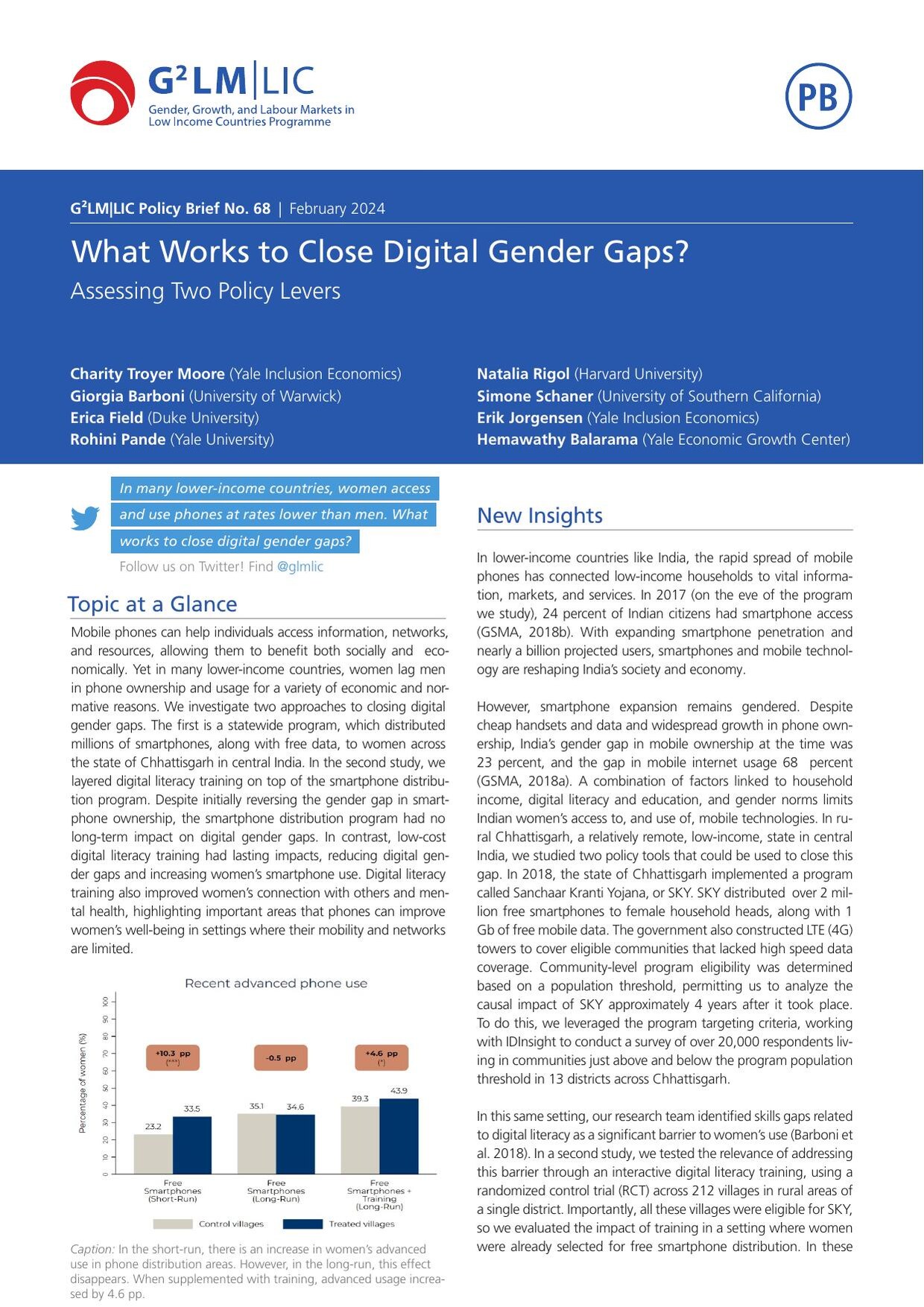
This policy brief investigates two approaches to closing digital gender gaps in lower-income countries, where women lag behind men in phone ownership and use for a range of economic and normative reasons. The first is a statewide programme in Chhattisgarh, central India, which distributed millions of smartphones along with free data to women. The second is a study that layered digital literacy training on top of that distribution programme.
The brief reports that despite initially reversing the gender gap in smartphone ownership, the distribution programme had no long-term impact on digital gender gaps. The low-cost digital literacy training, by contrast, had lasting effects, reducing digital gender gaps and increasing women's smartphone use. The finding matters because mobile phones help individuals access information, networks and resources, allowing them to participate more fully in economic and social life.
- Publication year2024
- Source or author/sG2LM|LIC
- Resource type
- Countries or regions
- Sectors or themes